
Romulus Resident Lookup Records
Begin with a focused question. A parcel record names an assessed party and a situs address. A deed places someone in a dated property transfer. A voter record answers registration and precinct questions, subject to Michigan's redaction rules. Court and vital records cover narrower needs and carry their own access limits. An older surname usually belongs in the Library, the Museum, a cemetery listing, a newspaper, or a probate file rather than a current-record search. No single result proves identity on its own.
| Record type | Useful confirmation | Romulus route | How it is reached |
|---|---|---|---|
| Assessment or tax record | Assessed party, parcel, situs, sale and improvement context | Romulus Assessor, BS&A, Wayne Treasurer | Limited online routes; City Hall, phone, email, fax, or a request for existing copies |
| Voter registration | Registration status, precinct, districts, and participation fields | MVIC, City Clerk, Bureau of Elections QVF | Individual portal or structured request, with statutory redactions |
| Recorded instrument | Named interests, transfer date, and legal-description trail | Wayne County Register of Deeds | Free index, paid images or copies, office, and mail routes |
| Court case | Party-name variant, filing, status, disposition, or hearing | MiCOURT, 34th District Court, Wayne Clerk | Public index or clerk-file route, subject to coverage and sealing limits |
| Vital or historical record | Event details and a dated family-history connection | MDHHS, Wayne Clerk, Library, Museum, Cemetery | Eligibility, fees, and repository rules vary by record |
Let the known fact pick the route. An address or parcel points to property records. A case number points straight to the court. For a historical name, compare an old directory or yearbook against a newspaper, cemetery, or deed record. Two Romulus tools help with property: the BS&A Romulus portal starts from an address, name, or parcel number, and the Wayne County Treasurer search accepts an address or parcel ID with a Romulus municipality choice. Neither result says who lives somewhere now. A mailing address is not proof of current occupancy.
Romulus MiCOURT Name Checks
MiCOURT's public case-search gateway opens with a notice about its limits. Read it first. The portal searches by participant name or case number. Official documentation lists first name, last name, full name, and case number as qualifiers. Court, type, status, and date filters can change in the live interface. Treat any match as an index lead, not the official file. Sensitive categories stay hidden, including adoption, juvenile, personal-protection, name-change, and mental-illness cases. The notice also bars bulk downloads and automated or excessive requests.
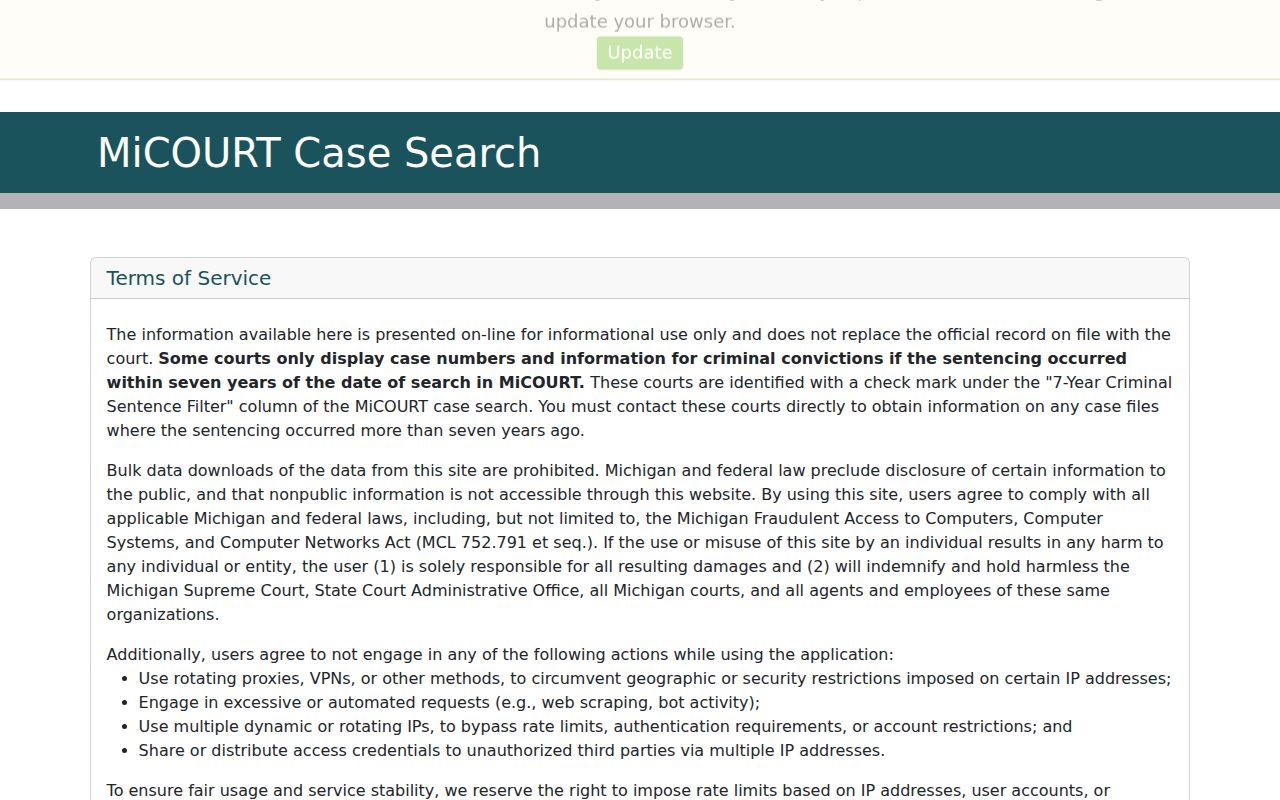
Write down the case number. When a matter matters, ask the clerk for the authoritative file. The notice itself points that way. Some criminal convictions surface only when the sentence falls within seven years. An empty result is never a complete history.
The 34th District Court traffic and plea service is a separate local route. Its traffic search uses a driver license number, license state, and date of birth. An online plea uses date of birth plus license and state, or a case number. Keep those identifiers out of any notes you keep.
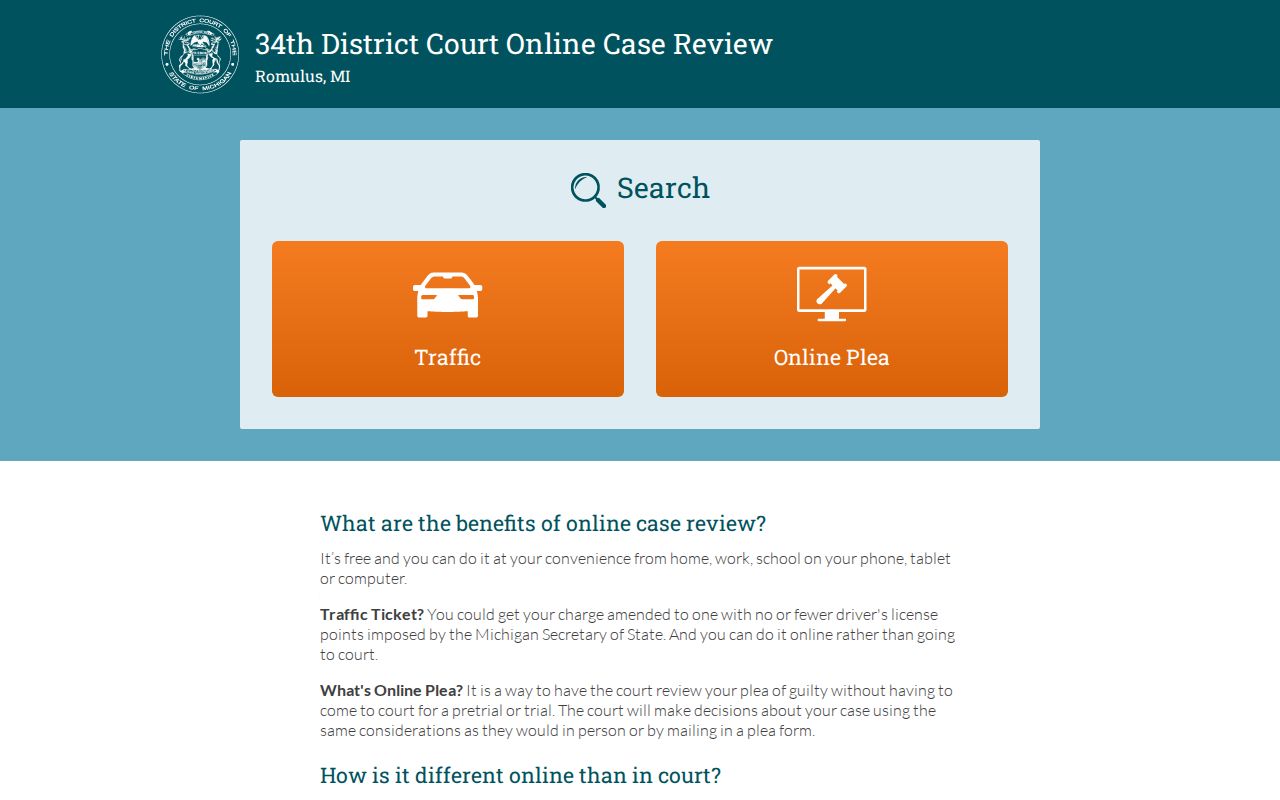
Older files may call for a clerk or archive route. The 34th District Court sits at 11129 Wayne Road in Romulus. For records beyond a public screen's coverage, the Wayne County records room can be the right next contact. The Archives can also help.
Note: A docket records court events. It is not a finding about a person's character, current location, or the full history of a case.
Romulus Voter Record Limits
Michigan voter-registration records are public through FOIA, but they are not a public contact list. For an individual, the Michigan Voter Information Center covers registration details. It also shows polling place, clerk, and ballot information. State guidance is clear on what stays private. Driver and state ID numbers, month and day of birth, and phone numbers are withheld. Michigan also has no party-registration field. A Romulus resident lookup promising party affiliation is overreaching. The records simply do not contain it.
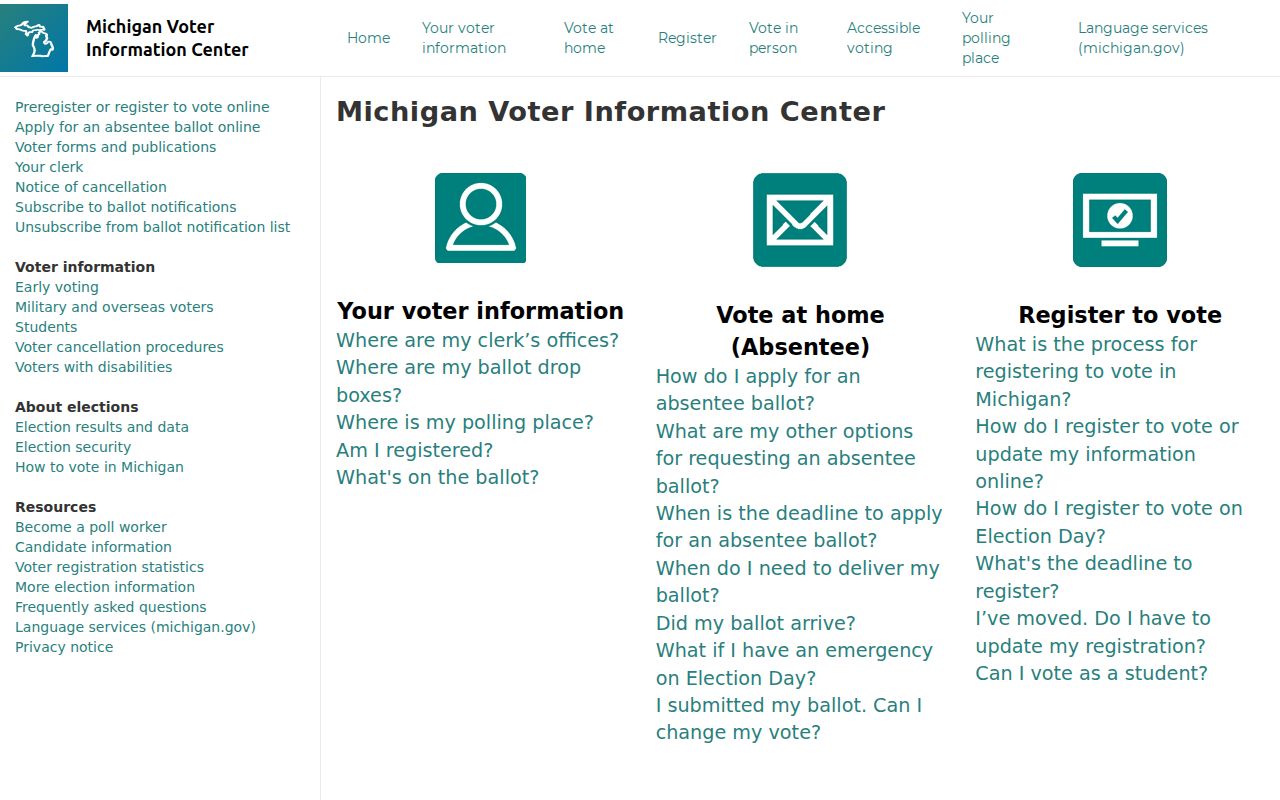
The portal's empty landing screen shows its current labels without needing a real identifier. A match may return a name, registration status, precinct, clerk, district, and election information. It never reveals ballot choices.
A defined public-data need can go through the Bureau of Elections QVF request. That request can cover a city, county, precinct, district, or another stated geography. The form offers pickup, secure FTP, or mail for a full data file. It does not offer email. Public fields may include name, address, year of birth, registration date, status, voter ID, vote history, and jurisdiction codes. Statutory redactions still apply. A status like inactive or challenged does not prove someone never lived at an address.
Romulus Vital Record Routes
Michigan Vital Records keeps births, deaths, and marriages from 1867 and divorces from 1897. The office separates event verification from a certified copy. Orders can go by mail, the authorized online provider, phone, dropbox, or appointment. The route depends on the record. Standard processing runs 10 to 12 weeks. Expedited service runs 8 to 10 weeks, and genealogy requests can take longer. Paying for a search does not guarantee a record turns up.
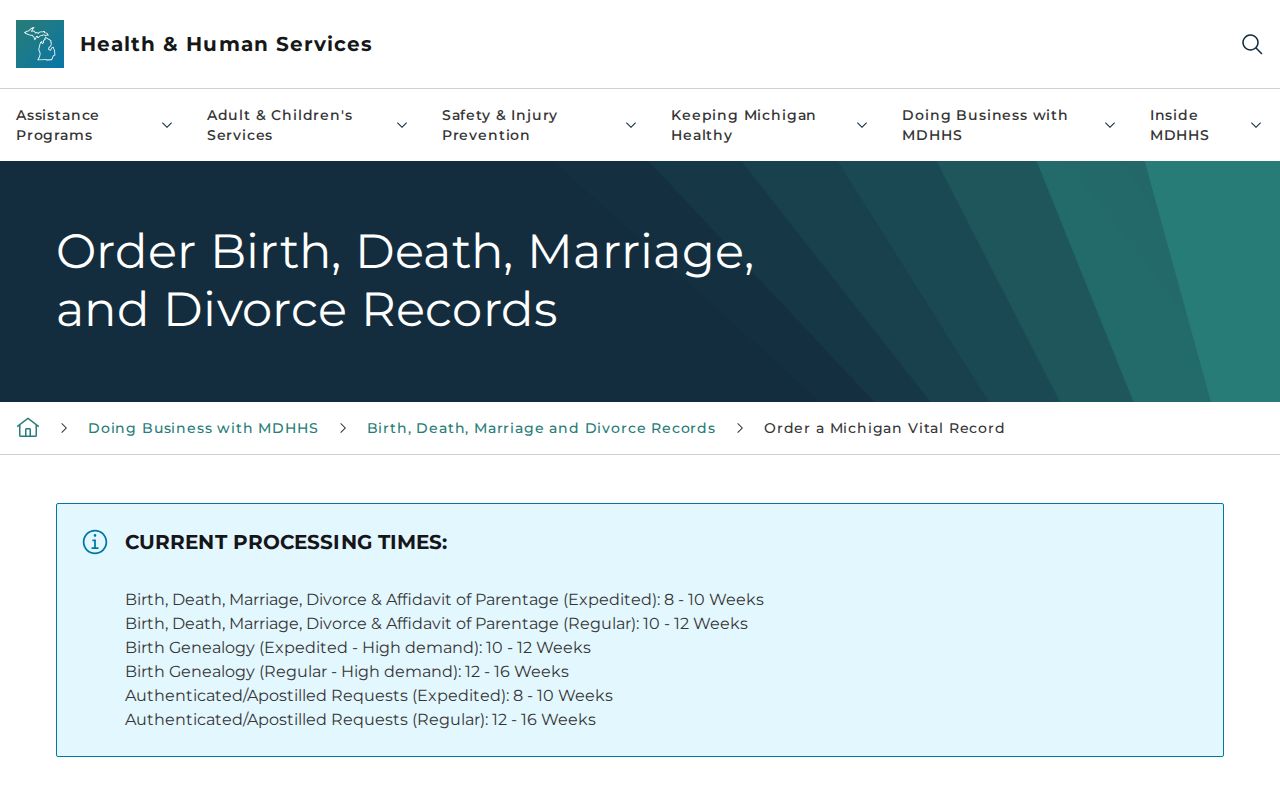
The order screen breaks the request into separate choices. You pick the event type and enter applicant contact. Then come subject details, eligibility or relationship proof, payment, and delivery. Birth records under 100 years are restricted by MCL 333.2882. Death, marriage, and divorce records have broader written-request access, with fees and exceptions. Wayne County handles marriage-license and copy routes. A divorce verification is no substitute for the court file.
Note: A verification, index entry, and certified copy differ in legal purpose, access rules, and fees.
Verify a Romulus Resident Lookup
A Romulus resident lookup works best when one fact confirms another. Start from a known location. Then test it against a dated record. Names alone can mislead. An owner on the assessment roll may list a mailing address far from the parcel. A court caption may include a party with the same name as the person you want. A death record can close an old trail. Yet it proves nothing about where a living relative resides now. Log the record type, date, repository, URL, and any doubt as you go.
- Anchor the name to a parcel, a dated address, a case number, or a known event. Keep the situs address separate from any tax mailing address.
- Check a second official index with a name variant plus another detail, such as a filing date, spouse, organization, legal description, or school year.
- Read a court result for case number, party type, status, and disposition, then ask the court for the official file if the index does not settle the question.
- Use MDHHS or the Wayne County Clerk for the correct vital-record channel, and order a certified copy only when it is genuinely needed.
- Preserve the access date and correct a suspected error with the record custodian rather than changing a copied note.
MiCOURT returns raw fields, and reading them carefully matters. A result may carry a case ID, caption, party type, year of birth when displayed, filing date, category, status or disposition, next hearing, a financial field, docket events, and document availability. A filing, a dismissal, a judgment, and a conviction all mean different things. Treat the screen as an inventory of fields, not a conclusion about anyone.
| Case identity | Case ID or number, caption, participant, party type, and year of birth when the result displays it. |
|---|---|
| Case progress | Filing date, court, category, status or disposition, next hearing, and docket events. |
| Available material | Financial field, document or image availability, and any seal or nonpublic indicator shown by the result. |
- Docket
- A chronological list of events in a court case, such as filings, hearings, orders, and disposition.
- Index and image
- An index points to a record. An image is the scanned instrument or document itself and can have different access or copy rules.
- Certified copy
- A copy issued by the custodian with official certification. It is different from an ordinary inspection copy or an online index entry.
Romulus Historical Name Records
Historical questions call for dated local collections rather than fresh lookups. The Romulus Public Library newspaper collection offers digitized Romulus and Huron papers spanning 1968 through 2008, plus high-school yearbooks digitized back to 1945, with missing-year and access caveats. The Historical Museum and Archives keeps maps, genealogies, assessment rolls, photographs, Civil War diaries, Underground Railroad evidence, and early African-American family material. These fit family history, estate trails, and old classmates better than current-address claims.
Check any newspaper OCR against a scan, a directory edition, a deed, or another record. A historical city-directory entry ties a name to an address for that edition only. It is not proof of ownership or present residence. For a year-by-year trail, the Romulus city directory material is the natural next stop.
Romulus FOIA Record Requests
When a specific city record is not online, Romulus accepts a FOIA form or a letter, email, fax, mail, or verbal request documented by the City. Name the department, record type, date range, address, parcel, project, preferred format, and a contact method. Requests go to City Hall at 11111 S Wayne Road, Romulus, Michigan 48174, by fax at 734-942-7592, or through the published coordinator route. The governing law is Michigan FOIA, Public Act 442 of 1976, MCL 15.231 et seq.
The City ordinarily has five business days to respond and may take a ten-business-day extension. Permitted charges can cover search, review or redaction, duplication, media, mailing, and allowed labor. A 50 percent deposit may apply once an estimate tops $50. Ask for existing non-exempt records and segregable portions. The City cannot compile a resident list or determine a person's status. MDHHS, the Register, the courts, and the QVF process stay the proper custodians for their own records.
Note: A narrow request naming a department, date range, record description, and format travels a clearer path than one seeking a compiled list of people.
Protecting a Romulus Resident Lookup
Public access has firm limits. Michigan redacts voter driver or state ID numbers, month and day of birth, phone numbers, email, digitized signatures, and other protected fields. Month and day of birth are protected too. Phone numbers and email stay out of public view. Digitized signatures and other protected fields round out the list. The Michigan Address Confidentiality Program, Act 301 of 2020, MCL 780.851 et seq., supplies a substitute address and mail forwarding for people facing domestic violence, sexual assault, stalking, human trafficking, or another threat of harm. That address is never a directory field. It must not be sought or republished.
Errors belong with the custodian. Ask the Assessor about an assessment-card fix. The Clerk handles a voter record, and the Register handles a recording issue. A court clerk can correct a docket, and MDHHS handles a vital-record amendment. Michigan's stalking law, MCL 750.411h, covers repeated or continuing unconsented contact. Once the lawful personal question is answered, record research should stop.
Lawful use. Use Romulus records for personal, lawful research and keep protected details private. Never use a record to stalk, harass, intimidate, or expose another person.