
Finding Romulus Residents
Romulus has no single public roster. The useful trail depends on the question. A parcel or street address can be matched to the City assessor, BS&A, the Wayne County Treasurer, the parcel map, and a recorded land instrument. A historical surname belongs first in directories, newspapers, yearbooks, cemetery material, and the Museum Archives. A narrow court, vital, or voter question has its own state or local custodian and its own privacy boundary.
Each source carries a different kind of evidence. An assessment card can identify an assessed party and parcel facts. A deed records an interest and transfer date. A directory entry is an address association for its edition year. None alone proves a present household. Use a second, independent record before treating a match as reliable.
- Normalize the name, address, or approximate year and write down spelling variants.
- For a place, obtain the parcel and legal description through the assessor, BS&A, or county map.
- Check the Register of Deeds index for a dated instrument and preserve its document reference.
- Use the Library or Museum for historical household context and verify OCR against the page image.
- Ask the custodian for an existing, non-exempt record when the online result is incomplete.
Romulus Records Jurisdictions
City offices hold assessment cards, permit and occupancy material, election routing, cemetery contacts, meeting records, and municipal archive items. Wayne County holds recorded land instruments, delinquent-tax tools, parcel geometry, county-clerk routes, and older repository leads. Michigan agencies handle the statewide vital, voter-policy, court, corrections, licensing, and confidentiality layers. Keeping those boundaries clear prevents a portal result from being described as something it is not.
Postal wording can also mislead. Romulus uses 48174 as its principal USPS clue, while Detroit Metropolitan Airport uses a Detroit 48242 postal designation. USPS confirms delivery assignments; a ZIP or postal city does not establish the municipal boundary for a parcel.
Romulus Parcel Search Routes
The BS&A Romulus portal begins with address, name, or parcel number and links to current tax, assessing, property-sale, building, licensing, utility, and detailed-search services. The City cautions that online data can be incomplete or late. City Hall records may be viewed free during normal hours, and the Assessor accepts inspection or requests in person, by phone, email, or fax.
| Romulus search field | Use | Limit |
|---|---|---|
| Address | Find a property starting point | Format is not fixed on the landing page |
| Name | Find an assessed-party lead | Not proof of occupancy |
| Parcel number | Connect tax and map records | May change when land is split or combined |
| Service tile | Choose assessing, tax, sale, or building context | Fields vary by service |
See the official BS&A Romulus start screen before choosing a search mode.
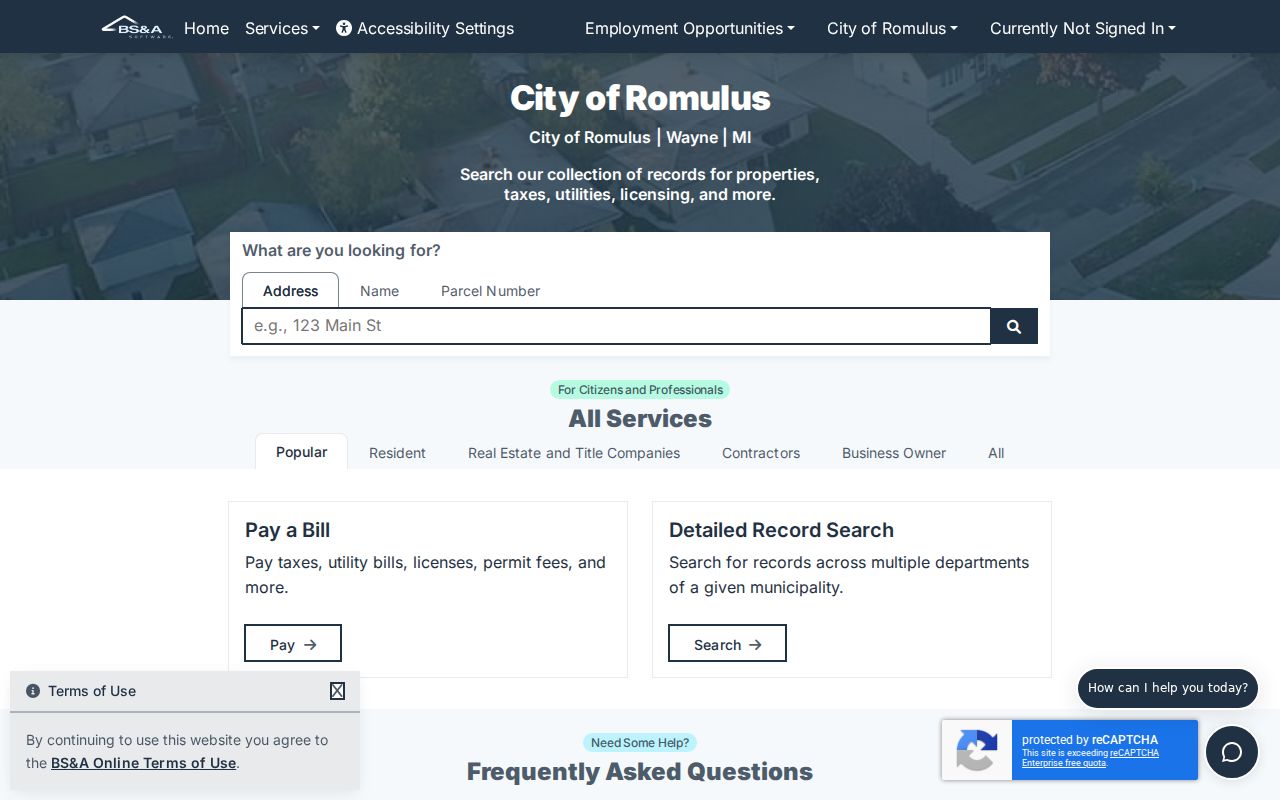
The screen shows why an address, name, and parcel are separate starting keys rather than interchangeable proof of residence.
The Wayne County property-tax search offers address or parcel-ID modes and includes Romulus in its municipality list. It is a delinquent-tax tool, not a substitute for a complete assessment card.
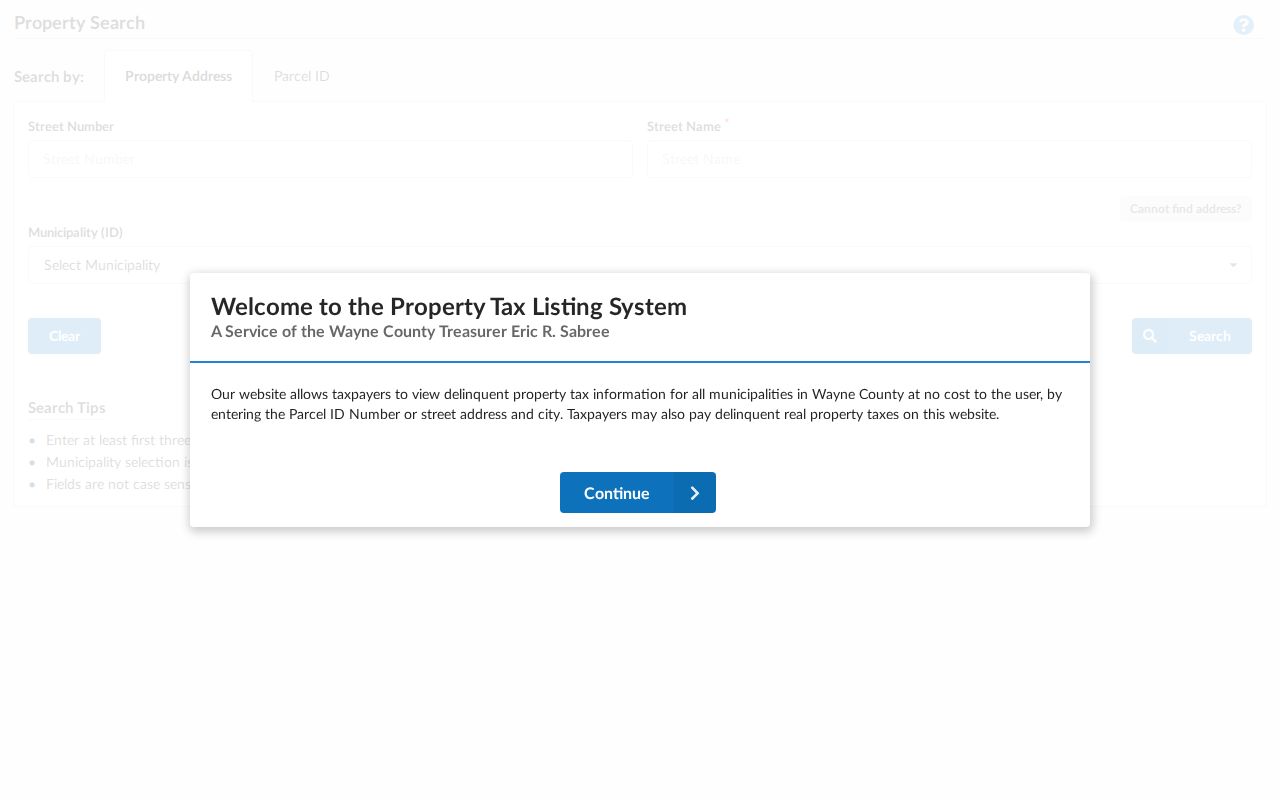
Use its result as a tax-status and parcel clue, then return to the City record for assessment detail.
Romulus Resident Records Offices
Three offices answer most first questions. The Assessor keeps city assessment material. The Wayne County Register of Deeds keeps recorded instruments. The Clerk and Michigan elections system handle voter-facing services and public-record rules. Street-address research follows those address keys in more depth; here, the important point is to choose the keeper before ordering a copy.
Wayne County Register of Deeds
400 Monroe, seventh floor
Detroit, MI
313-224-5854
Building & Safety at 12600 Wayne Road is the route for defined permit, occupancy, and inspection material. It can show a project tied to a property ID, but an applicant or permit field should not be presented as a household list.
Wayne Deed Index Trail
The Wayne Register search service has a free, listing-only name index. Its On Demand service supports street address, legal description, parcel or tax ID, and Liber/Page searching, with account, image, and print charges. The index history reaches 1703, but county pages describe different web cutoffs, one says 1960 and another says after 1986. Confirm older coverage with the office before declaring a search complete.
Search the public land-record landing page through its official county entry point, then preserve the instrument, legal description, and copy route as a single record trail.
The county’s search and copy guidance explains the free-index, paid-image, office, and mail routes.
That distinction matters because a listing alone does not establish title or reveal every printed field on the underlying instrument.
- Parcel
- A current tax or mapping identifier for a tract of land.
- Index
- A finding tool that points to a record; it is not always the complete record image.
- Grantor and grantee
- The parties named in a recorded conveyance, commonly the transferring and receiving sides.
- Criss-cross directory
- A historical directory arranged by address rather than surname.
Current Romulus Resident Sources
Current records are partial by design. They can supply a lawful, dated lead for an owner, registered voter, court party, or licensed entity, but no one system lists every Romulus household. The most useful source is the one that matches the question and protects the fields the law keeps private.
| Source | What it can show | Custodian | Access route |
|---|---|---|---|
| Assessment and tax records | Assessed party, parcel, values, property facts | Romulus / Wayne | BS&A, office, tax portal |
| Recorded land index | Instrument parties and dated transfers | Register of Deeds | Free index, paid copy, office, mail |
| Voter records | Public registration fields subject to redaction | Michigan elections | MVIC or structured request |
| City archive | Public notices, election, planning, and civic items | Romulus | Archive search or request |
| Library collections | Newspapers and yearbooks for dated history | Romulus Library | Online and library access |
For a name that must be compared across several public systems, the Romulus resident lookup uses a record-by-record verification path instead of treating one search hit as conclusive.
Michigan Voter Records Limits
The Michigan Voter Information Center is designed for a voter to check registration, polling place, clerk, and ballot information. Michigan makes registration records public through its rules, but driver or state ID, month and day of birth, phone, email, signature, and other protected fields are not public. Michigan does not register voters by party.
Use the voter portal as a limited, person-facing service.
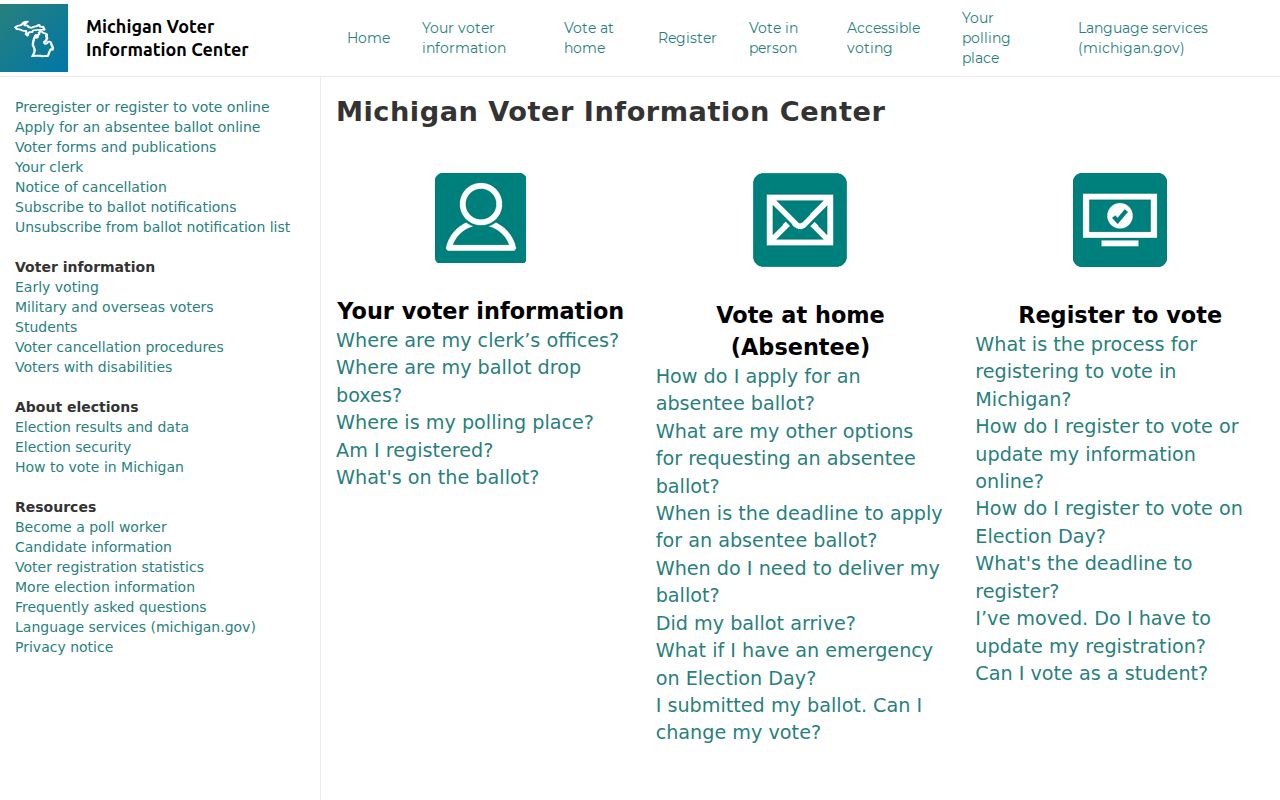
For a defined geographic or historical request, the state’s QVF process is the structured alternative and applies statutory redactions.
Note: A registration status change is not proof that a person never lived at a Romulus address.
Romulus Court Search Context
MiCOURT supports participant or name and case-number searches, but the judiciary calls the results informational rather than the official file. Sensitive categories are excluded, availability varies, and a filing, dismissal, judgment, and conviction are different events. The local 34th District Court service has traffic and plea tools with their own identifiers.
Review the MiCOURT public-information notice before searching.
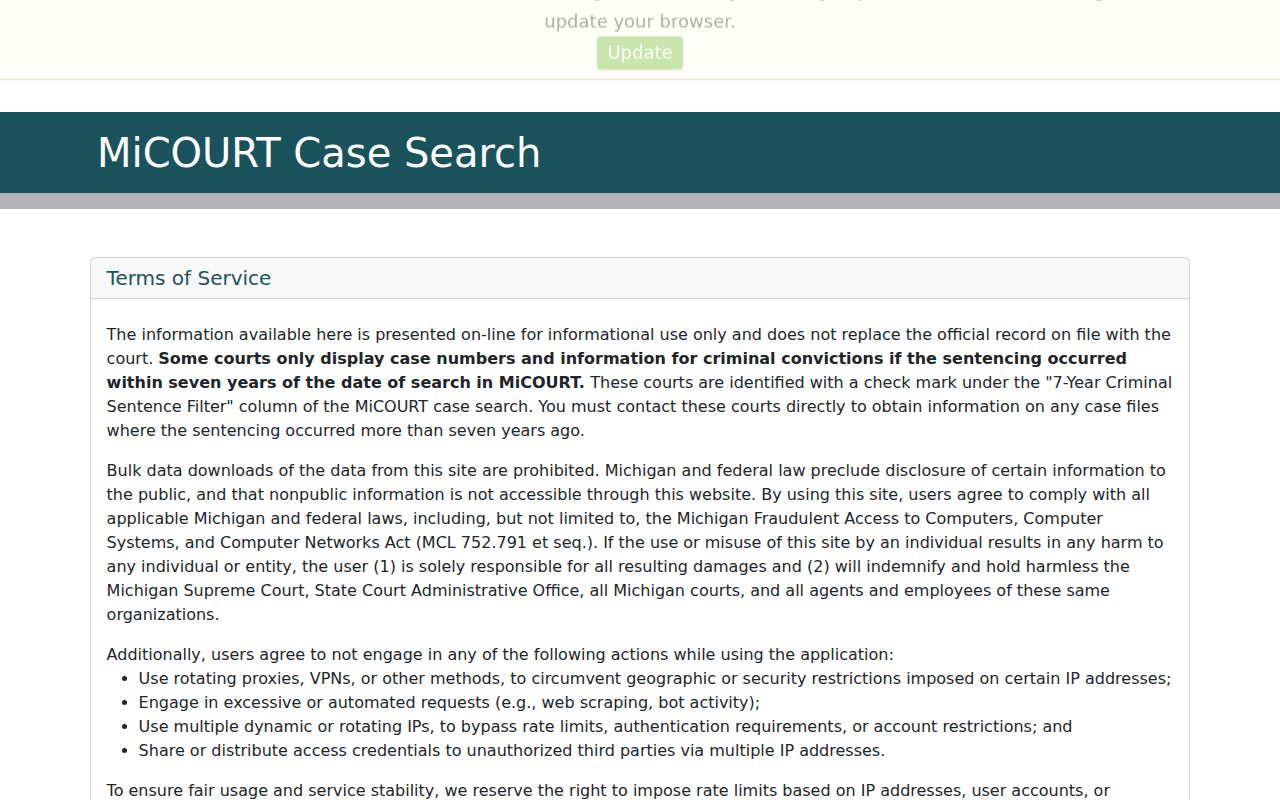
The gateway sets the boundary between a public index and a court file that must be obtained from the appropriate clerk.
Michigan Registry Search Limits
The Michigan State Police registry offers name, registration or MDOC number, street address, city, county, ZIP, and radius modes within its own statutory scope. Its results and filters do not create a general residents directory, and the agency provides no complete download. Use a record only for the limited, lawful purpose the system allows and never as a reason to approach or harass anyone.
Its official search modes illustrate the narrow scope of a regulated public system.
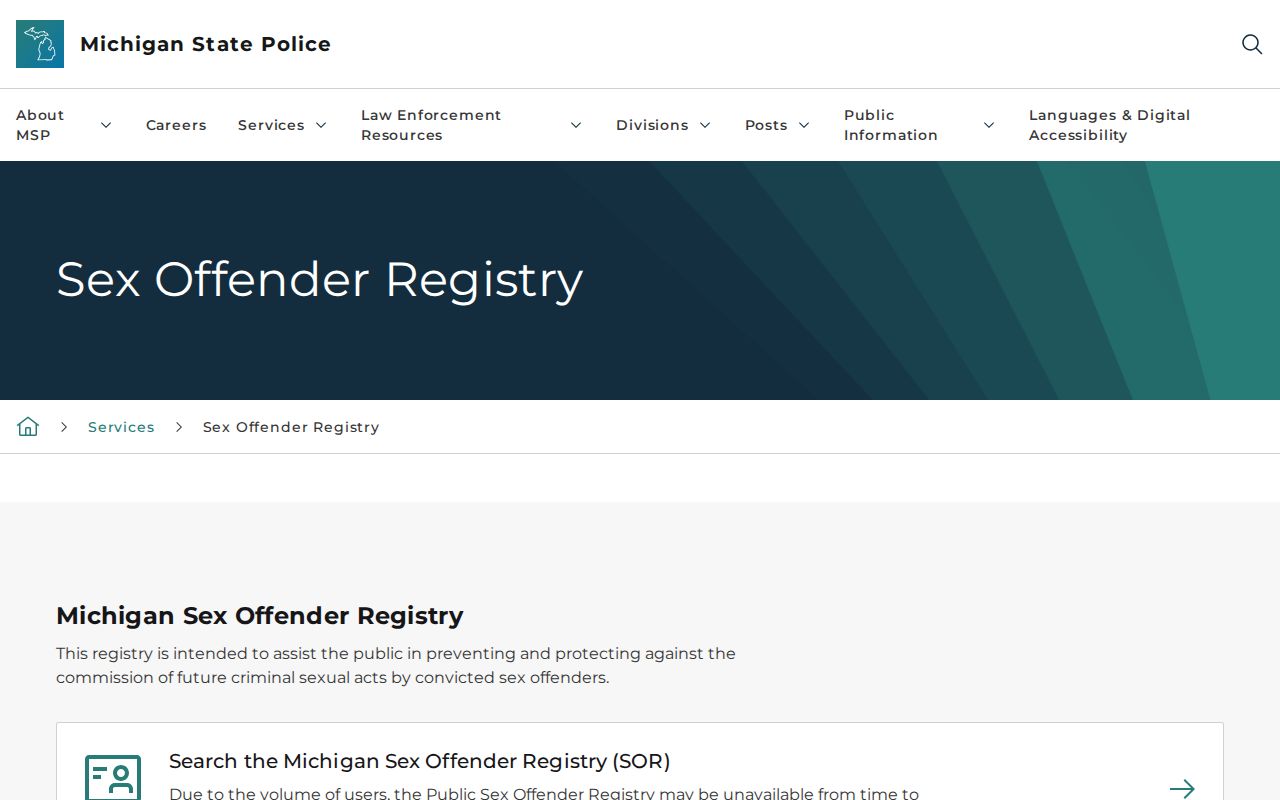
Address and geographic controls should be read with the registry rules and date, not treated as an invitation to compile a neighborhood list.
Michigan Vital Record Routes
Michigan Vital Records handles births, deaths, marriages, and divorces through mail, authorized online ordering, phone, dropbox, or appointment. State records begin in 1867 for birth, death, and marriage, and 1897 for divorce. Birth records under 100 years have eligibility rules under MCL 333.2882; death, marriage, and divorce requests have different rules and exceptions.
The state’s order page shows the available request methods and cautions that a search fee is not a guarantee that a record will be found.
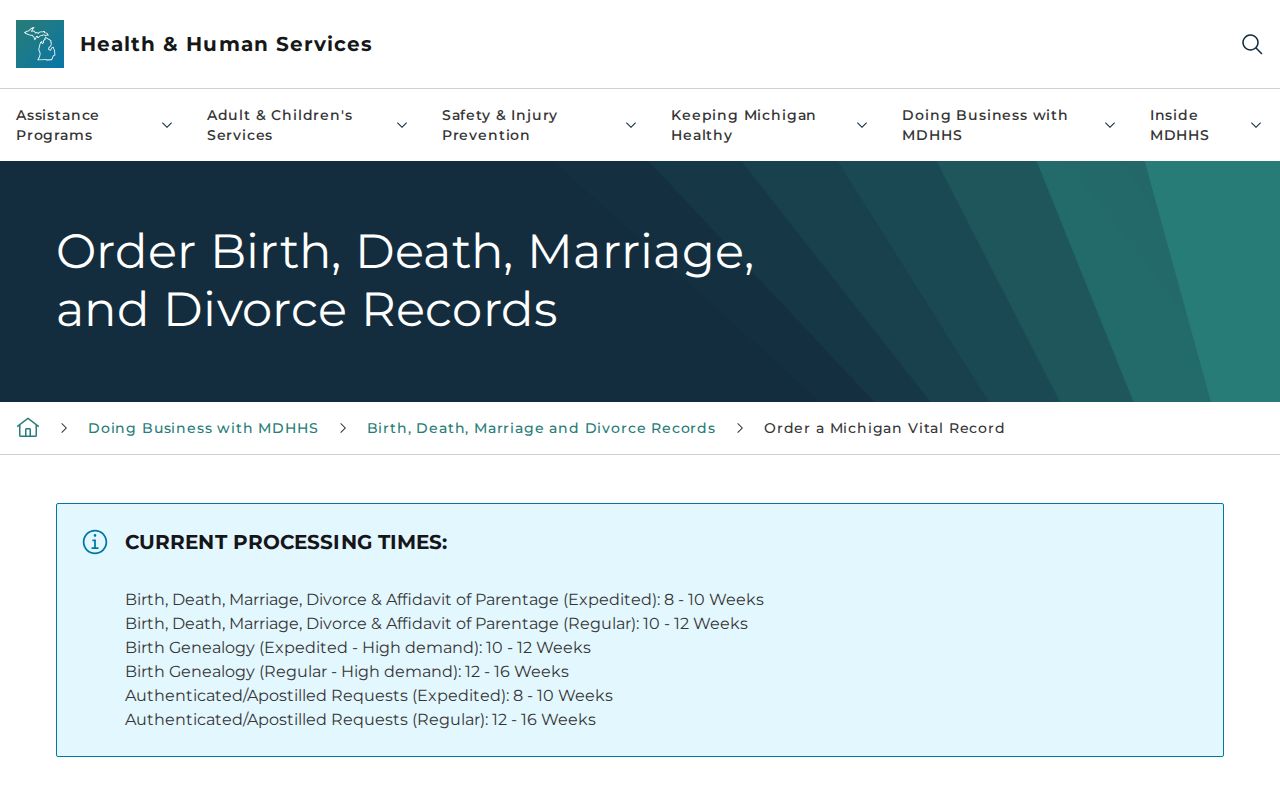
For historical work, use the library or archive route first when it can answer the question without seeking a restricted certified record.
Historical Romulus Resident Directories
Romulus’s historical shelf is broader than one verified city-directory title. The Library of Michigan recommends searching its catalog by city name and checking county, suburban, and gazetteer volumes; it holds print, rare-book, and microfilm material. The Romulus Public Library links genealogy tools, digitized newspapers from 1968 through 2008, and high-school yearbooks from 1945 forward, subject to stated gaps and access limits.
No official source in this research established a complete Romulus-only publisher or year run. That absence is important. Ask the Library of Michigan, Romulus Library, Museum, and Wayne repositories for a title, year, call number, and page before citing an entry. The Romulus Directory Book explains how to read those editions without confusing a directory address with land title.
Romulus Archive Collections
The City’s Archive Center is searchable by keyword, archive category, time period, and date. Categories include election-school district items, results, planning notices, BZA, budgets, audits, water quality, resident spotlights, TIFA, DDA, and millage. It is a strong source for civic context around a dated address or organization, not a complete resident roll.
The Historical Museum and Archives adds old maps, genealogies, assessment rolls, photographs, documents, Civil War material, Underground Railroad evidence, and early African-American family material. Its setting in the 1839 schoolhouse and the nearby 1855 Kingsley House makes the collection a local records story, not merely an online search result.
Romulus Source Trail Checks
A careful Romulus residents directory search keeps the source type in view. The City assessment card can identify a parcel and an assessed party. A county deed can record a transfer. A library newspaper can place a name or address in a dated public event. These sources may agree, or they may describe different people, dates, or purposes. Record the exact result and compare it before drawing a conclusion.
| Official or repository source | Commercial directory category |
|---|---|
| Names the custodian, record type, access route, and date | May combine records from different dates and sources |
| Can be checked with the office, library, or archive that holds it | May be stale, incomplete, or merge people with similar names |
| Explains its legal and access boundaries | Does not replace a custodian’s original record |
Use the official record as the source of a fact. A directory-style result can point to a spelling or place to investigate, but it is not a substitute for the assessor, Register, court, Library, or state agency.
Romulus Names Across Eras
Local labels change over time. Romulus began as a township in 1835, gained rail connections in the nineteenth century, grew around an airport begun in 1927, and incorporated as a city in 1970. A historical item can therefore use a township, city, airport, subdivision, county, or postal label for a place now read as Romulus. Preserve the label printed on the source and compare it with the parcel legal description or a dated map rather than rewriting it as a modern address.
The Museum Archives, Library newspapers, yearbooks, and county tract index are especially useful for this kind of local context. They make it possible to document a past household or property story without projecting a historic result onto a present resident.
Protected Romulus Addresses
Michigan’s Address Confidentiality Program provides a substitute address and mail-forwarding route for qualifying people facing specified threats. It is not a public-directory field. Voter, vital, and motor-vehicle records also have protected categories, and public records must not be used to map or pursue a protected person.
Review the Michigan Address Confidentiality Program information directly.
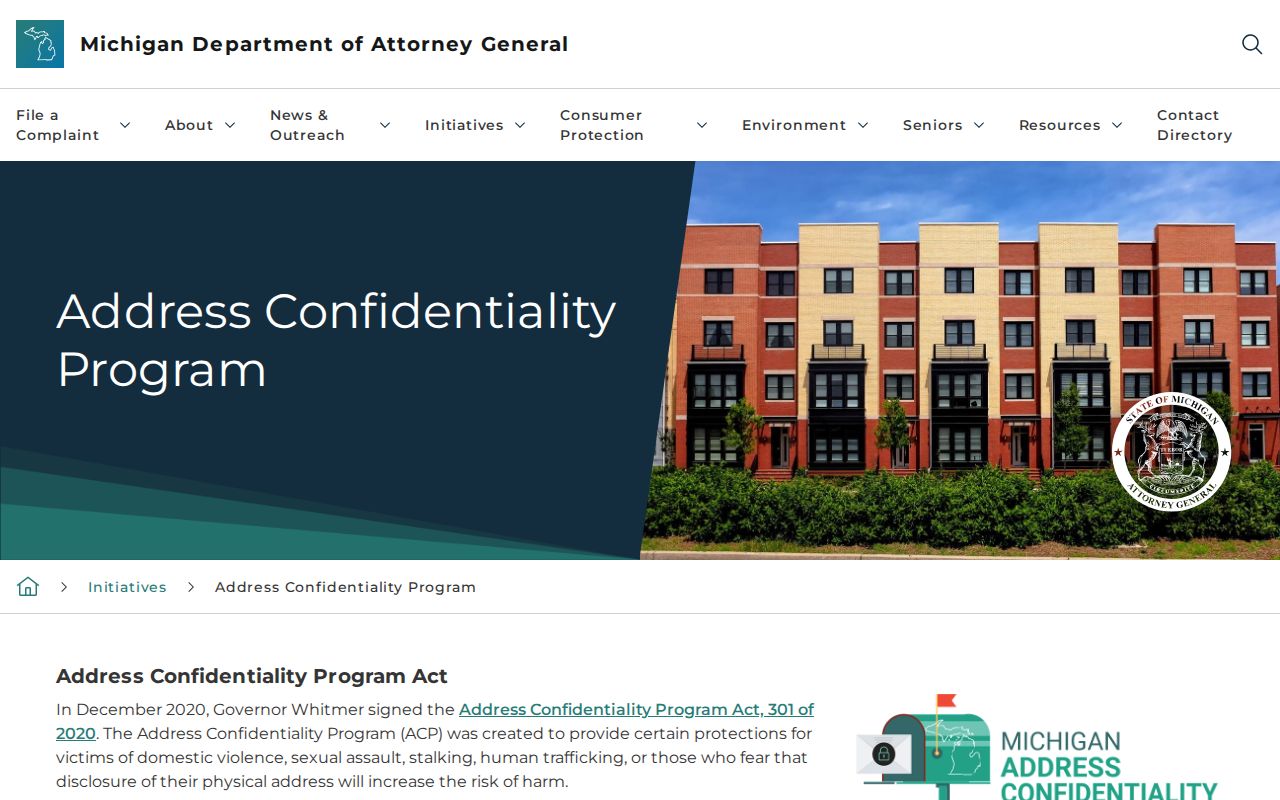
Its substitute-address explanation is a reminder that a missing result can be a legal safeguard, not a research problem to work around.
Romulus Requests and Fallbacks
When a portal does not hold the needed record, request an existing one from the responsible custodian. Romulus accepts a FOIA form or a letter, email, fax, mail, or documented verbal request. Identify the department, record type, date range, address, parcel, or project and ask for electronic copies where available. Under Michigan FOIA, PA 442 of 1976, MCL 15.231 et seq., the City generally responds within five business days and may take a ten-business-day extension.
A narrow request works better than a request for a list of residents. The Register handles deeds, MDHHS handles vital records, courts handle court files, and Michigan’s election process handles voter data. Give the custodian a fee ceiling and ask for an itemized estimate if the cost will exceed it.
Keep the response with the original request, date, and any fee estimate. That small record trail helps distinguish a portal result from a copy released by the custodian and makes later corrections easier to trace.