
Romulus City Directory Holdings
No Romulus-only city directory title appears in the catalog. That gap is not proof none exists. Romulus material often sits under Wayne County, Downriver, Detroit-suburban, township, county-directory, and gazetteer headings instead. Before treating an entry as evidence, record the title, publisher, year, coverage, repository, call number, and page or image number. Verify before you cite. The local history shelf also reaches well past printed directories, holding several dated companion sources that can anchor a directory lead.
| Collection | Years or coverage | Where held | Access |
|---|---|---|---|
| Michigan city directories | Publisher and year vary; no verified Romulus run located | Library of Michigan print shelves, Rare Book Room, Microfilm Room, Ancestry Library Edition, HeritageQuest | Search catalog by city or county and ask for suburban or county volumes |
| Romulus and Huron newspapers | 1968 to 2008 | Romulus Public Library digitized collection and Internet Archive links | Full-text search online; verify OCR against the page image |
| Romulus High School yearbooks | 1945 forward | Romulus Public Library | Older than five years may be digital; physical copies generally stay in the building |
| Romulus middle-school yearbooks | 1986 to 1995, 1999, 2001 to 2005, 2007, 2010, and 2014, with gaps | Romulus Public Library | Confirm the exact volume and format with the Library |
| Museum archival materials | Historic local materials; no complete public person index located | Romulus Historical Museum and Archives | Ask for a finding aid or item-level assistance |
Every companion source answers a different question. A directory fixes a person at an address in one printed year. A newspaper adds dated events. A yearbook, map, or assessment roll can confirm a household. It can also confirm a street on its own. Treat any catalog result as a first stop, never the final answer.
Confirm that the volume truly covers Romulus or the relevant Wayne County community. Check the format next. It may sit on an open shelf or wait in the Rare Book Room. It may live on microfilm or fiche, or sit inside a library database. Some volumes are restricted to in-building use. The Romulus Public Library, at 11121 Wayne Road, posts local-history and genealogy links. Its staff answers 734-942-7589. The Museum is separate, not a branch catalog. When you write to either institution, give the surname, alternate spellings, and an approximate year. Add the old address or road name and the kind of item you want. Be specific. A narrow request makes a missing directory run easier to distinguish from a collection nobody has searched.
Finding Romulus Directory Sources
The Library of Michigan directory guide explains how these publications place an ancestor in a city. It does so by year. A single entry may tie together a surname, an occupation, and household members. It can also list an address, a phone, and a printed ownership notation. Polk-style works usually run alphabetical surname entries beside street sections organized by house number. For a small community like Romulus, a county directory or gazetteer often beats a city title. Search the ANSWER catalog with the city name plus "directory." Then ask staff whether the period you need falls under Wayne County or suburban holdings.
The official Library of Michigan guide lays out the arrangement and the repository routes. It makes no claim of a scanned Romulus edition.
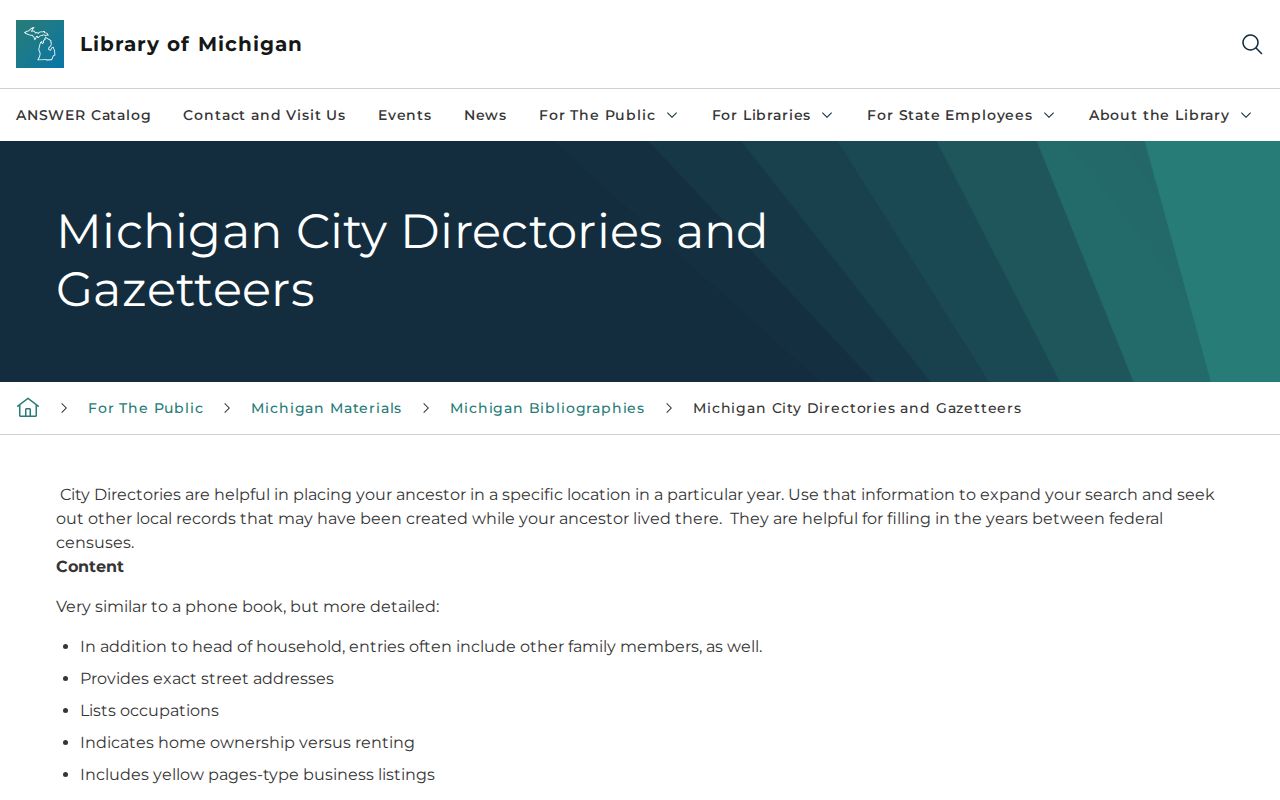
Print directories sit on the Library of Michigan second-floor South, shelved by city or county. Rare works, microfilm, and fiche follow their own room rules and access procedures.
Romulus Directory Companion Sources
The Romulus Public Library newspaper collection is a strong companion. Use it whenever no city-directory run turns up. It holds digitized Romulus and Huron papers spanning 1968 through 2008. Yearbooks go back further. Digitized high-school volumes start in 1945. Search by surname, street, school event, civic organization, obituary, or planning notice. Then inspect the page image instead of trusting OCR alone. The library's local-resources page also links Ancestry Library Edition for in-building use. It adds FamilySearch, Michigan Family History for Wayne County, and other historical resources.
The Library collection page carries the newspaper and yearbook access notes.
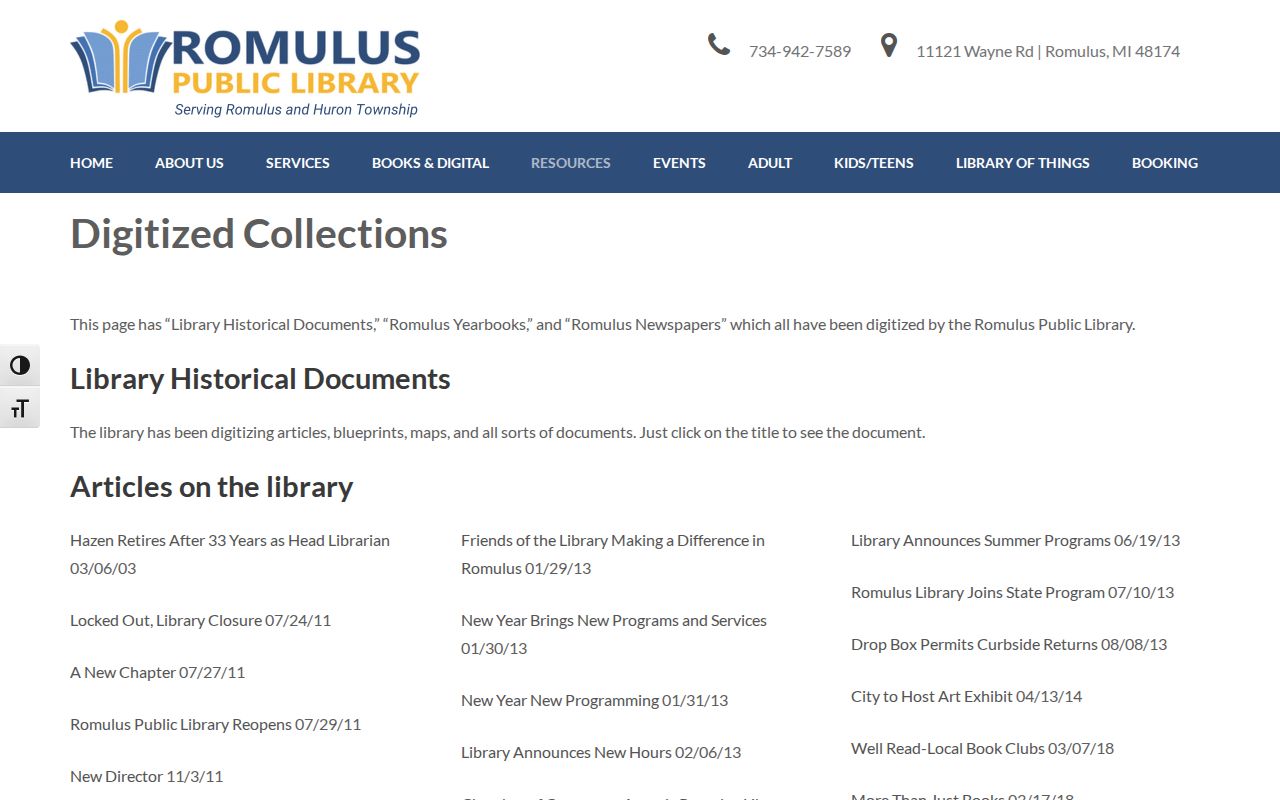
A newspaper or yearbook mention is a dated public clue, not proof by itself. Cite the publication, date, and page or image. Confirm the fact where it truly matters.
Note: The Library flags missing years and format limits, so a failed search may reflect coverage gaps rather than an absent person or event.
Reading a Romulus City Directory
No scanned Romulus edition is published online. The inventory below therefore describes the kinds of information a city-directory volume may print, not a guaranteed Romulus format. Read the edition's own abbreviation key first. An initial, address notation, or ownership mark can mean something specific to that publisher. Preserve spelling variants and initials exactly as printed. A directory address is an association for that edition year, not a deed title and not a current locator.
| Printed name or initials | Identifies the listed person or household head and may require comparison with spelling variants. |
|---|---|
| Historical occupation or business | May appear in a volume and can help distinguish same-name entries. |
| Street and house number | Places the listing at a printed address for that edition. |
| Other household names | May appear where the volume includes a spouse, widow notation, or related listing. |
| Ownership notation or phone | Interpret only from the edition’s key; historical phone data should not be republished as a current contact detail. |
- Criss-cross directory
- A street-order section that may list entries by address rather than surname.
- Householder index
- An index organized around the household or address, where the volume provides one.
- Abbreviation key
- The legend in a volume that explains its shorthand and must be read before drawing conclusions.
Romulus Archives Beyond Directories
The Romulus Historical Museum and Archives holds old maps, genealogies, assessment rolls, photos, documents, Civil War diaries, Underground Railroad evidence, and material on early African-American families. The archive occupies the original 1839 one-room schoolhouse. The restored 1855 Kingsley House stands nearby. It publishes no searchable public person index or full online finding aid, so a request should name the surname, address, date range, subject, and record type wanted. The City lists the Museum contact at 734-942-2340. Call before planning a visit.
The City's Historical Park and Archives page describes material that can add local context to any directory lead.
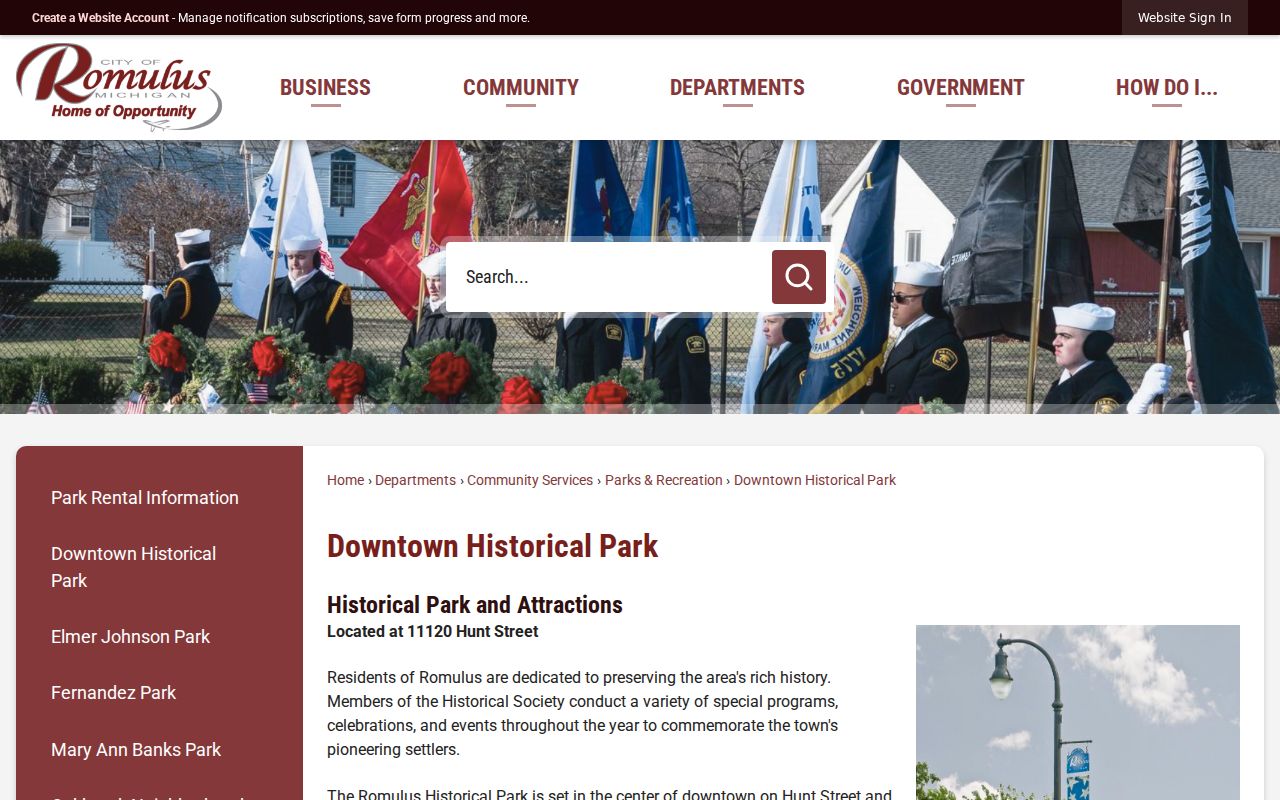
Old maps and assessment rolls can tie a printed address to its neighborhood history. A direct request for an item beats assuming an online person search exists.
Romulus Archive Center Records
Romulus runs a second municipal resource apart from its clerk and library holdings. The City’s Archive Center offers keyword searches plus filters by category, time period, and date. Its collections include election and school-district material. They also cover election results, resident spotlights, planning notices, BZA items, budgets, audits, water quality reports, TIFA, DDA, and millage records. None of these are historical directories in the classic sense. Even so, they can pin down the date of a public project, civic event, or municipal action. That can help when the record is tied to an address or surname you are tracing. When you cite an archive item, use its actual title, date, and category.
The Romulus Archive Center page displays the search controls a visitor will encounter.
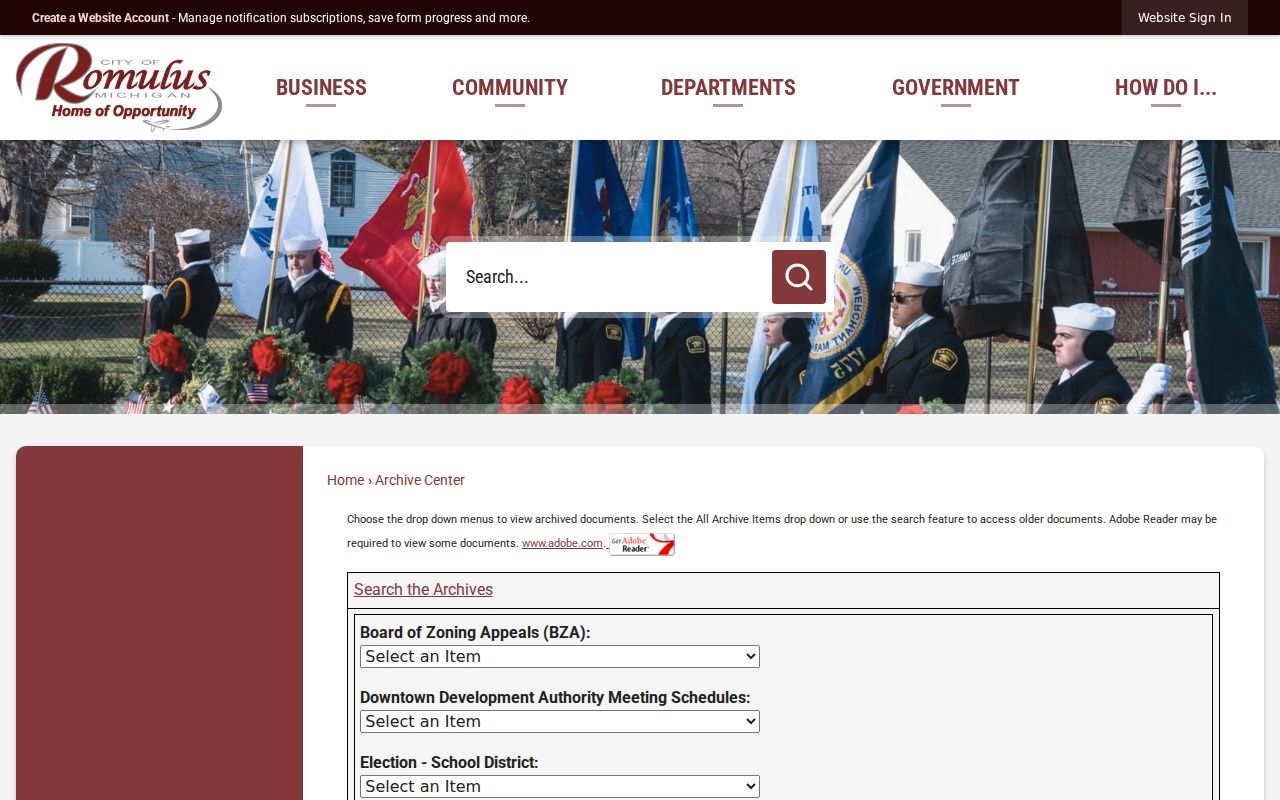
Set a clear date range before you search. Choosing one record category keeps an archive query from sprawling into unrelated personal details.
Trace Families Through Romulus City Directories
Treat a city-directory lead as one dated stop in a household timeline. Start by identifying the exact edition and entry. Log its spelling, address, occupation text, page, and repository. Then check the next edition or an adjacent year for a move, a spelling change, or a disappearance. Pair directory years with the matching federal census year, and bring in the deed chain only when a title question truly matters. Newspapers, yearbooks, cemetery sources, and the Museum can each help test a date or a family connection. One record alone settles little in Romulus family research. Layered sources do the real work.
- Search the surname and its spelling variants in a confirmed edition, then cite its title, year, page, and repository.
- Check the street section or criss-cross portion when the volume has one, and record the printed address exactly.
- Compare the next available directory or county volume for movement, a changed listing, or a different household notation.
- Pair the dated entry with the relevant census, newspaper page, yearbook, or cemetery source rather than relying on one publication.
- Use the Register or Assessor only for a separate parcel or recorded-instrument question, not to turn a historical listing into proof of present residence.
A name vanishing from a volume can mean many things. It may signal a move, a death, changed coverage, a missing issue, or an editor's choice. Treat it as a prompt for another source, never as a conclusion.
Romulus Directory Dates Need Verification
No official source establishes a first Romulus directory year. The same goes for publisher changes. It also covers a last printed year, or any verified Romulus-specific criss-cross run. Resist the urge to fill those gaps with a plausible Detroit or Wayne County date. The documented access story sits elsewhere. The Library's Romulus and Huron newspaper digitization began in December 2011. It finished in December 2020. That project made a defined local publication run easier to search. It does not prove any local directory was digitized.
| 1835 | Romulus was organized as a township, a label that may appear in older records. |
|---|---|
| 1970 | Romulus incorporated as a city, another jurisdiction label that can affect catalog searching. |
| December 2011 | The Library newspaper digitization project began. |
| December 2020 | The documented newspaper digitization project was completed. |
Romulus Place Names in Directories
Changing place labels complicate catalog and archive searches. Romulus was settled in the 1820s and organized as a township in 1835. Rail lines arrived in 1870 and 1880, an airport in 1927, and city incorporation in 1970. A single record may lean on township, city, subdivision, county, or postal language. DTW-related addresses can read Detroit, Michigan 48242 even though the airport is closely tied to Romulus. Search the place name exactly as the source printed it. Then compare it against the street, the legal description, or a map.
For current lookups, the modern address-record chain belongs with the Romulus street directory. Historical directory, library, and archive sources still do the best job of placing a household or location in time.